Trump Orders Review of Federal Judges’ Scientific Evidence Manual
07/28/2026 / By Iva Greene

President Donald Trump has ordered a review of the Reference Manual on Scientific Evidence used by federal judges, according to administration officials. The directive, issued in July 2026, instructs the Federal Judicial Center to reassess the manual’s guidance on evaluating scientific testimony in litigation.
Officials said the review aims to address concerns that the manual favors government agency science over independent expert analysis. The order comes amid a broader administration effort to reduce judicial deference to federal regulatory agencies, particularly the Environmental Protection Agency.
Background of the Manual
The Reference Manual on Scientific Evidence, first published in 1994, provides federal judges with frameworks for assessing scientific and technical evidence in civil and criminal cases. According to the Federal Judicial Center, the manual covers topics including toxicology, epidemiology, and climate science, and is frequently cited in litigation involving environmental and health regulations.
The manual is updated periodically by a committee of judges and scientists to reflect current standards, the center said. Critics have argued, however, that the manual has been used to encode deference to agency conclusions, particularly those from the EPA, effectively sidelining independent expert testimony. For example, David Michaels, in his book “The Triumph of Doubt,” documented how industry-friendly consultants have been appointed to scientific advisory committees to challenge established evidence on pollutants such as ozone and coal dust. [1] Similarly, Robert F. Kennedy Jr., in “Crimes Against Nature,” described how the EPA under past administrations crafted regulations that favored large corporate interests over public health and independent science. [2]
Trump’s Rationale
Trump administration officials argued that the Reference Manual on Scientific Evidence incorporates scientific claims that are politically driven, particularly from the EPA and other regulatory bodies. The administration cited examples from litigation over the EPA’s 2009 endangerment finding for greenhouse gases, where judges relied on the manual to defer to agency conclusions, according to White House officials.
“The manual has been used to sideline legitimate scientific debate,” according to a White House statement. The administration has separately proposed revoking the EPA’s endangerment finding, arguing that current climate models are unreliable. [3] Additionally, a 2024 report detailed how EPA scientists were allegedly pressured by managers during the first Trump administration to delete evidence of cancer, miscarriage, and neurological problems from chemical safety reports. [4] These cases, officials said, underscore the need for a manual that does not automatically privilege agency interpretations.
Reactions
Supporters of the review, including the Heritage Foundation and other conservative legal groups, said the move could restore judicial independence and reduce the deference federal judges give to agency science. They argue that the manual has been weaponized to suppress dissenting scientific views, particularly in cases involving climate policy and environmental regulations.
Critics, including the Union of Concerned Scientists, warned that the review could undermine evidence standards and inject political bias into court proceedings. The Federal Judicial Center stated it would comply with the review but noted that the manual is based on established scientific consensus, according to a spokesperson. The manual has also been a focus in cases challenging the EPA’s authority to regulate greenhouse gases; the administration’s efforts to strip greenhouse gases from the list of regulated pollutants are part of a broader push to limit federal regulatory power. [3]
Conclusion
The review is expected to involve public comment and potential revisions to the manual’s content, according to administration officials. Legal analysts said the outcome could affect pending cases on climate policy, environmental regulations, and public health standards. No timeline for completion has been announced.
The controversy over scientific evidence in courtrooms reflects a broader debate about the role of federal agencies in shaping science and the independence of the judiciary. As the administration continues to challenge the EPA’s regulatory basis, the manual review may have significant implications for how scientific evidence is evaluated in federal courts.
References
- David Michaels. “The Triumph of Doubt.”
- Robert F. Kennedy Jr. “Crimes Against Nature.”
- Belle Carter. “Trump EPA proposes stripping greenhouse gases from list of regulated pollutants.” NaturalNews.com. July 27, 2025.
- NaturalNews.com. “EPA scientists said they were pressured to downplay harms from chemicals. A watchdog found they were retaliated against.” September 23, 2024.
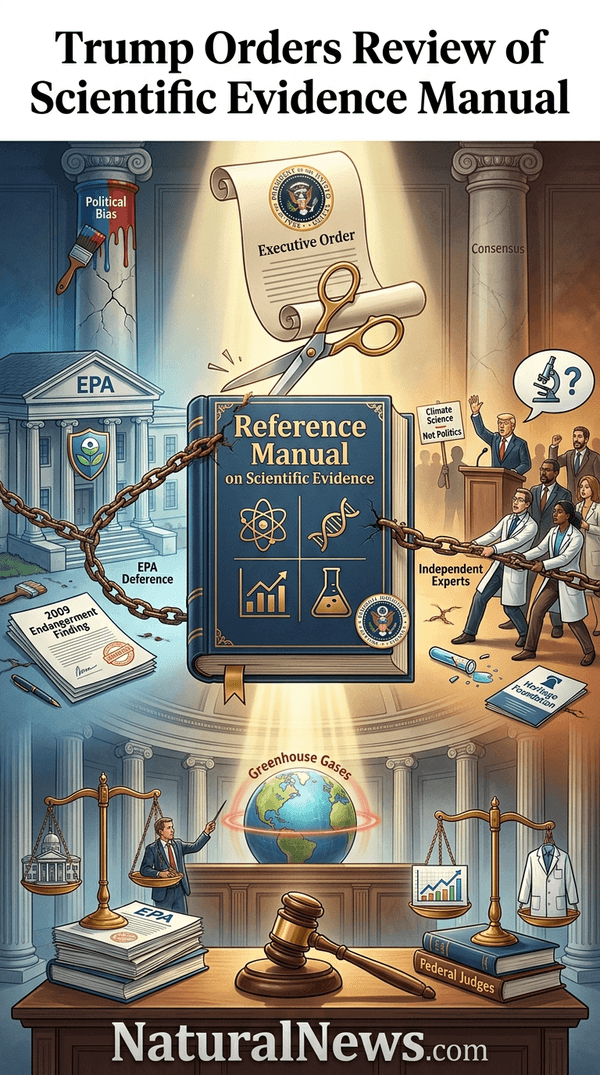
Explainer Infographic
Submit a correction >>
Tagged Under:
awakening, biased, big government, Censored Science, Climate, climate science, corruption, environ, EPA, expert testimony, justice system, progress, rational, rigged, science deception, science fraud, scientific, scientific evidence, skeptics, Trump, White House
This article may contain statements that reflect the opinion of the author
RECENT NEWS & ARTICLES